Showing posts with label Rodin. Show all posts

December 8, 2011

Like a Flower I Knew

The Crouching Woman


It's you, dear Vera, I would remember now,
like a flower I knew before I could name it.
I would show you to the gods,
you vanished one, you unforgotten cry.

Dancer before all else, you hesitated,
paused, as if your youth could be cast in bronze.
Bringing grief and a strange attention,
your music changed the heart.

Then the illness came. Shadows gathered,
a darkness in the blood,
cutting short your springtime.

And, as if your dancing
were a knocking at the door,
it opened, and you entered.

Sonnets to Orpheus I, 25

December 1, 2011

Let This Darkness Be a Bell Tower

Statue

Quiet friend who has come so far,
feel how your breathing makes more space around you.
Let this darkness be a bell tower
and you the bell. As you ring,

what batters you becomes your strength.
Move back and forth into the change.
What is it like, such intensity of pain?
If the drink is bitter, turn yourself to wine.

In this uncontainable night,
be the mystery at the crossroads of your senses,
the meaning discovered there.

And if the world has ceased to hear you,
say to the silent earth: I flow.
To the rushing water, speak: I am.

Sonnets to Orpheus II, 29

Photo of Rodin statue found here

November 26, 2011

Enter Death (II)

Orpheus and Eurydice

When you died, there broke across the stage,
through the gash your leaving made,
a shaft of reality: green of real green,
real sunlight, real trees.

Still we keep acting: fearful and solemn,
reciting our script, taking on gestures.
But you, who have been withdrawn from us,
subtracted from our very being,

now and again you overcome us,
showing us the reality we glimpsed,
so that for a while, jolted back, we are life
with no thought of applause.

New Poems

November 25, 2011

Enter Death (I)

Orpheus and Eurydice

We know nothing of this going.
It excludes us. Faced with death,
what cause have we to respond
with the fear and grief or even hatred

that twist the features to a mask of tragedy?
On this side of death we play roles.
So long as we seek to please the audience,
death, who needs no approval, plays us.

New Poems

November 17, 2011

Orpheus, Do You Hear?

Orpheus, by Auguste Rodin

Orpheus, do you hear
the new sound
droning and roaring?
Many now exult in it.

Though the Machine
insists on our praise,
who can listen
with all this noise?

See, it rolls over everything,
weakening us
and taking our place.

Since its strength is of our making,
why can't it serve
and not possess us?

Sonnets to Orpheus I, 18

October 31, 2011

Endlessly Offered into Life

L'homme qui marche, by Auguste Rodin
photo by Adam Rzepka

Oh, the pleasure of it, always emerging new
from the loosened clay.  Those who dared to come first
had hardly any help. Nevertheless cities arose
on sun-favored coasts, and pitchers filled with water and oil.

Gods: we picture them first in wild brushstrokes
which petty Fate keeps wiping away.
But gods don't die. Let us listen to them:
they will be there to hear us at the end.

We are one generation through thousands of years,
mothers and fathers shaped by children to come,
who, in their turn, will overtake them.

We are endlessly offered into life: all time is ours.
And what any one of us might be worth,
death alone knows—and does not tell.

Sonnets to Orpheus II, 24

October 18, 2011

On Security

Sketch, by Auguste Rodin

Outside of poetry and art, security is only and ever achieved at the cost of the most inescapable limitation. This diminishment consists of choosing to be satisfied and pleasured by a world where everything is known and where preoccupation with self is both possible and useful. But how could we want that? Our security must become a relationship to the whole, omitting nothing.

Letter to Ilse Erdman
October 9, 1916

September 19, 2011

Creating for Always


Those who create are like you, God.
They long for the eternal.
Carving, they say: Stone, be forever!
And that means: be yours.

And lovers also gather your inheritance.
They are the poets of one brief hour.
They kiss an expressionless mouth into a smile
as if creating it anew, more beautiful.

From The Book of Hours II, 10

September 9, 2011

When Doubt Serves

Age of Bronze, Middelheim, Antwerp

Doubt can serve you well, if you train it. It must become a way of knowing, a good critic. Every time doubt wants to spoil something for you, ask why it finds something ugly and demand proofs. Thus tested by you, doubt may become bewildered and embarrassed, even aggressive. But don't give in, demand reasons and be persistent and attentive every single time, and the day will come when, instead of a destroyer, he will become one of your best servants—perhaps one of the most intelligent of those who help you build your life.

Furnborg, Jonsered, Sweden, November 4, 1904
Letters to a Young Poet

August 13, 2011

If Something of the Ancestors Lives On

Rilke in Meudon
Rodin's studio and residence
Photographer: anonymous

Even the next era has no right to judge anything if it lacks the ability to contemplate the past without hatred or envy. But even that judgment would be one-sided, for every subsequent era is the fruit of previous periods and carries much of the past within it. It is fortunate if something of the ancestors lives on in it and continues to be loved and protected; only then does the past become fruitful and effective.

Early Journals

August 11, 2011

For the Sake of the Whole

Closeup of the Burghers of Calais

Are there relations of the heart that embrace what is most cruel for the sake of wholeness? For the world is only world when everything is included.

Letter to Marianne von Goldschmidt-Rothschild
December 5, 1914

Image found here.

August 5, 2011

May What I Do Flow from Me

Nude Woman Standing in the Sea

May what I do flow from me like a river,
no forcing it and no holding back,
the way it is with children.

Then in these swelling and ebbing currents,
these deepening tides moving out, returning,
I will sing you as no one ever has,
streaming through widening channels
into the open sea.

From The Book of Hours I, 12

July 10, 2011

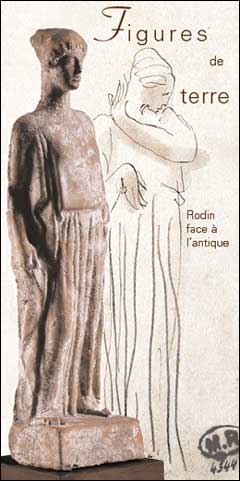
Tanagra


A small piece of earth, burned,
as if burned by the sun's fire.
The touch of a girl's hand
seems somehow still upon it.
Feel how it remained there,
not longing for anything other,
just resting into itself
like fingers on a chin.

We take up this figure, then that,
turning them in the light.
We can almost understand
how they managed to survive.
We need only smile
and accept more fully
what it offers to our eyes.

New Poems

July 6, 2011

Between Hammers Pounding

observing work on the Monument to Victor Hugo
Lebossé's studio, 1896

Between hammers pounding,
the heart exists, like the tongue
between the teeth—which still,
however, does the praising.

From the Ninth Duino Elegy

July 5, 2011

Gold


Gold leads a pampered life, protected by banks,
on intimate terms with the best people.
The homeless beggar is no more than a lost coin
fallen behind the bookcase or in the dustpile under the bed.

In the finest shops, money is right at home,
loving to parade itself in flowers, silk and furs.
He, the silent one, stands outside this display.
Money, near him, stops breathing.

How does his outstretched hand ever close at night?
Fate, each morning, picks it up again,
holds it out there, naked and raw.

In order to grasp what his life is like,
to see it and cherish it, you would need a song,
a song only a god could bear to hear.

Sonnets to Orpheus II, 19

June 29, 2011

Slowness

Painting of Auguste Rodin in the Musée Rodin, Paris
artist unknown, shared here

As for me, my internal pace is slow. Mine is the intrinsic slowness of the tree that embraces its growth and its blooming. Yes, I have a bit of its admirable patience. I had to train myself in it from the moment I understood the secret slowness that engenders and distills any work of art. But if I know its temporal measure, I know nothing of its immobility. Oh, the joys of travel!

Letter to a friend
February 3, 1923

June 18, 2011

The Animal That Never Was

unfinished sculpture 'La Pensee'


This is the animal that never was.
They didn't know, and loved him anyway:
his bearing, his neck, the way he moved,
the light in his quiet eyes.

True, he didn't exist. But because they loved him
he became a real animal. They made a space for him.
And in that clear, uncluttered space, he lifted his head
and hardly needed to exist.

They fed him: not with grain, but ever
with the chance that he could be.
And that so strengthened him

that, from within, he grew a horn.
All white, he drew near to a virgin and found himself
in a silver mirror and in her.

Sonnets to Orpheus II, 4

June 17, 2011

You, Orpheus

Orpheus, by Auguste Rodin

But you, divine poet, to the end a singer:
falling prey to the pack of Maenads,
you wove their shrieking into wider harmonies,
and brought from that destruction a song to build with.

No one to call when they raged and wrestled,
but the jagged stones they hurled
turned gentle when reaching you,
as if able to hear you.

Hounded by hatred, you were torn to pieces
while your music still rang amidst rocks and lions,
trees and birds. There you are singing still.

O dear lost god, you endless path!
Only because you were broken and scattered
have we become the ears of nature, and her voice.

Sonnets to Orpheus I, 26

June 7, 2011

The Oldest Work of Art

Five Dancers, by Auguste Rodin


God is the oldest work of art. He is very poorly preserved, and many parts of Him are later additions. But that is the way things get built: by our being able to talk about Him, by our having seen everything else.

Early Journals

May 20, 2011

Never Yet Spoken

Sketch, by Auguste Rodin


I believe in all that has never yet been spoken.
I want to free what waits within me
so that what no one has dared to wish for
may for once spring clear
without my contriving.

From the Book of Hours I, 12